Home Author
Author

Anna Dalton

Advertisement

One of Canada’s most trusted and respected scientists, Dr. David Suzuki, stands accused of seditious libel on Wednesday, November 6, 2013. A public trial is to take place at the Royal Ontario Museum (ROM). The reason for this charge? On Wednesday, October 9, on the steps of the Toronto Courthouse, Suzuki announced his Carbon Manifesto – a bold, uncompromising plan that spells out the end of oil and sets a new course for Canada’s sustainable energy future. The Manifesto calls for the end of fossil fuels as a primary energy source; to protect Canada’s Boreal forest and oceans; a move ensuring 70% of the energy we consume is renewable within one generation; a carbon tax of $150 per tonne effective immediately; and that Canadian climate scientists must be able to share their findings uncensored and unimpeded by political or corporate interests.


Will Suzuki’s Carbon Manifesto save Canada or destroy it? Is he talking reason or treason? Is Suzuki undermining the financial security of the country? Or does the economy and country matter when our planet is turning toxic?

This unique theatrical event, The Trial of David Suzuki, created and produced Laurie Brown, in partnership with David Donnelly of Donnelly Law, will take place in the ROM’s Currelly Gallery.  The mock public trial features real lawyers, expert witnesses, judge and a jury of 12 people who, along with the audience, will vote on the fate of Suzuki. The Defense lawyer is Linda Rothstein, Partner at Paliare Roland Barristers; the prosecution lawyer is Will McDowell, partner at Lenczer Slaght;  David Suzuki is there as himself; and the Bailiff is Laurie Brown. The role of Judge is to be announced. Expert witnesses are business professor, Michael Hlinka and Environmental Commissioner of Ontario, Gord Miller. This innovative and dramatic trial will challenge science, law, art—and the audience.  Along with the jury, the audience will listen to the expert testimony and decide if David Suzuki is innocent or guilty, right or wrong.

“Many of us are confused about climate change, and often the conversation on this important subject stalls,” says creator, Laurie Brown. “I wanted to create an art piece that catapults the conversation into a new place:  what would happen if Canada did something big to counter global warming?  Like leave oil in the ground?  I want The Trial of David Suzuki to imagine that future for Canadians.”

“This trial is about more than David Suzuki, more than environmentalism in Canada – it is about placing all Canadians in that awkward, difficult position that our policy makers find themselves everyday,” says Dave Ireland, Managing Director, Centre of Discovery in Biodiversity.  “The Trial of David Suzuki, in my mind, is about making clear and public choices towards a sustainable future for humans on the planet.”

As part of The Trial of David Suzuki, a series of six Pattison posters titled You Be The Judge will be displayed in subway stations across Toronto. Between October and December, these posters will engage the public in conversations about climate change and the views of Dr. David Suzuki. Opposing Views, a shot video mapping conflict perspectives onto the face of Suzuki will also be featured every minute on Pattison’s 60 foot wide video display at Yonge and Edward streets, bringing millions of passers by into this public conversation.

Advertisement

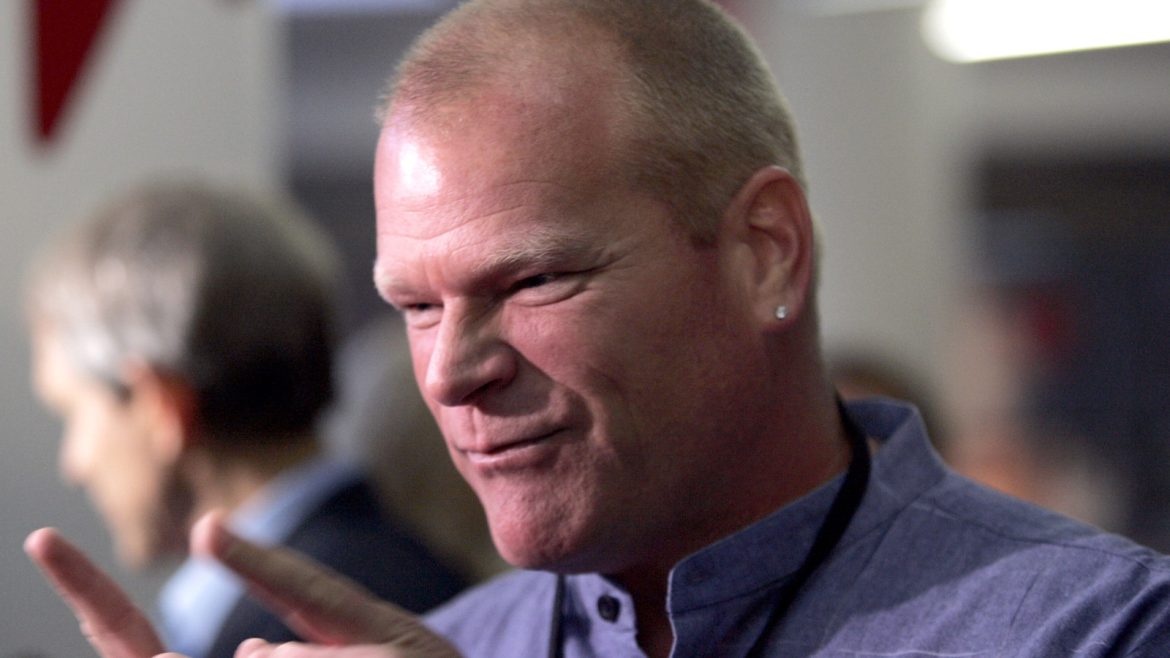
If there’s one person you want to trust, it’s the person fixing the roof over your head, and for years, Canadian HGTV star Mike Holmes was the best man for the job. The renovation king of Canada began his career when he went from handyman to television host after his big personality caught the eye of a television studio he was consulting for. Holmes would launch a fleet of HGTV shows, starting with “Holmes on Homes” in 2001, and become a beloved face on the network for the next 20 years. While he has weathered his fair share of tragedy, he has also been celebrated. In 2006, the Canadian House of Commons recognized Holmes for supporting skilled trades and helping improve building standards. And if that wasn’t enough to make you trust him, in 2010, Reader’s Digest named him one of the most trusted Canadians.

But with great trust comes great responsibility, and Holmes hasn’t always lived up to his name. As his star has risen, he has been caught up in a number of scandals and scams that have rocked his otherwise sturdy reputation. While some of them border on the humorous or mundane, others are far more serious, with every instance ending with the sad story of people who looked up to Holmes being milked out of their hard-earned money. Holmes spoke out about the scams on his podcast, “Holmes on Homes,” saying, “I’m not into doing these things. I’m into helping people. I’m into educating people. I’m sick and tired of seeing things like [these scams].” Still, some of the scandals make us wonder whether Holmes’ motto of “Make It Right” is really a motto he lives by.

Mike Holmes has a big social media presence, with thousands of followers across his Facebook, Instagram, and YouTube pages. While it has allowed fans to feel close to him, it has also become a fertile ground for casting call scams. In one instance that Holmes and his daughter, Sherry Holmes, discussed on their podcast, Holmes talked about a fake Facebook account that went by the name “Carl Wallace,” which claimed to be a campaign manager for HGTV and a casting associate producer for fellow HGTV celebrities like the Property Brothers. The fake account then put out what appeared to be a call for applicants for one of Holmes’ shows, asking for $50,000 upfront to do a $150,000 job to redo kitchens. The scammers would then try to get the money from Facebook applicants but never come through with any renovation.

Holmes was upset by the fake account pretending to use his fame and knowledge against him and made it known that he wasn’t the only HGTV star affected. He said on his podcast, “They’re doing it to the Property Brothers, they’re doing it to Bryan Baeumler. These people are all of a sudden using my image and trying to get to you as a casting call, to get money out of you, that I’m gonna come and save your life.” While Holmes has every right to be upset, his daughter Sherry admitted, “It is believable. You do put out casting calls online.” This makes Holmes’ use of social media a double-edged sword. On one hand, it helps fans feel connected to him; on the other, it puts the burden on them to double-check if it’s actually him or not.


Advertisement

In a landmark victory speech that signals a dramatic shift in Canada’s foreign policy, Liberal Party leader Mark Carney—who is poised to return as prime minister for a second time—announced the end of what he called a ‘historic’ and ‘prosperous’ relationship with the United States.

His statement came after he scored a stunning third consecutive victory in parliamentary elections, shocking and surprising many with his statements, bringing his party out of the rear and confirming its dominance in Canadian politics.

“The era of integration between Canada and the United States of America is over,” Carney declared to roaring applause from supporters. “Our old relationship with the United States, which had brought prosperity to Canada, is over.” The speech reflected not just a political victory, but a bold, strategic reset in how Canada views its southern neighbour and former closest ally.

The election campaign had been heavily influenced by growing tensions with the US, particularly President Donald Trump’s repeated provocations and controversial rhetoric. Trump’s disdain for Canada’s sovereignty was laid bare through his frequent and deliberate mischaracterisation of former PM Justin Trudeau as a “Governor” rather than the head of an independent government. Trump even went so far as to suggest that Canada could be “bought” by the United States—remarks that initially drew laughter in Ottawa, but later provoked anger as they continued.

 Canadian Prime Minister Mark Carney speaks to supporters on stage at his campaign headquarters after the Liberal Party won the Canadian election in Ottawa, Tuesday, April 29, 2025. (Justin Tang//The Canadian Press via AP)Canada responded to Trump’s comments by mockingly offering to purchase four US states: California, Oregon, Washington, and Minnesota.

Faced with mounting diplomatic tensions, Trump retaliated by slapping punitive tariffs and trade restrictions on Canadian exports, affecting key sectors of the Canadian economy. These economic moves, seen by many as deliberate attempts to weaken Canada’s independence, created widespread anxiety and resentment. It was against this backdrop that Carney called for early elections—to seek a strong mandate to push back.

Carney’s fiery words came during a victory speech that capped one of Canada’s most dramatic election turnarounds in recent memory. The former banker, who only recently replaced Trudeau as prime minister, steered the Liberals to a surprise win – just months after the party seemed headed for collapse.

Advertisement

For decades, traditional computers have followed the same principle: bits representing 0s and 1s process information through electrical circuits. But as problems become more complex—such as simulating molecules, optimizing logistics, or breaking cryptographic codes—classical computing reaches its limits. This is where quantum computing comes in.

Quantum computers harness the principles of quantum mechanics, using quantum bits (qubits) that can exist as both 0 and 1 simultaneously thanks to superposition. Qubits can also become entangled, meaning the state of one is linked to another, even at a distance. These properties allow quantum computers to perform calculations that would take classical computers thousands of years.

Pages: 1 2 3

Advertisement

The Earth is undergoing rapid changes due to human activity. Rising global temperatures, melting glaciers, and extreme weather events all point to one undeniable reality: climate change is reshaping our planet. Scientists are working tirelessly to understand these changes and predict their consequences for the future.

At the heart of climate change is the greenhouse effect. Gases such as carbon dioxide and methane trap heat in the atmosphere, causing global temperatures to rise. While this effect is natural and essential for life, human industrial activity has dramatically increased greenhouse gas levels, leading to global warming.

Pages: 1 2 3

Advertisement

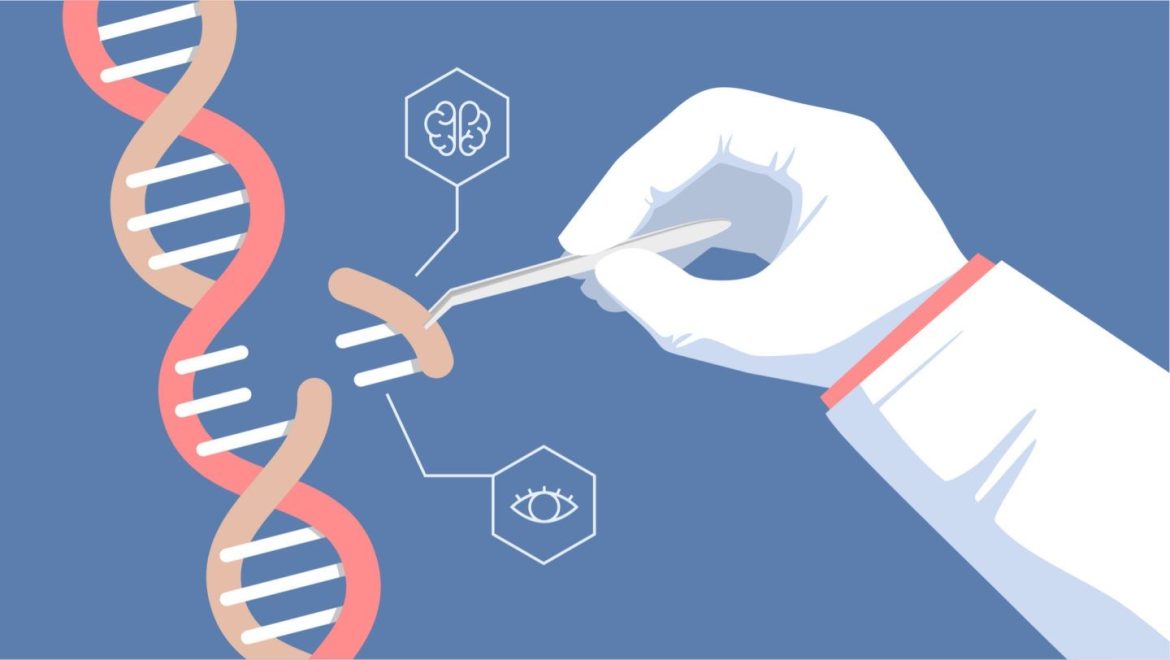
In 2012, scientists discovered a groundbreaking tool called CRISPR-Cas9, a molecular system that allows researchers to edit DNA with unprecedented precision. What was once science fiction quickly became reality, ushering in a revolution in genetics and medicine.

CRISPR works like a pair of molecular scissors guided by RNA. It can cut DNA at a specific location, allowing scientists to remove, insert, or modify genetic material. This technology has opened possibilities for curing genetic diseases that were previously untreatable. Conditions such as sickle cell anemia, cystic fibrosis, and muscular dystrophy could one day be corrected at the genetic level.

Pages: 1 2 3

Advertisement

When astronomers look at the cosmos, they see galaxies rotating, stars forming, and cosmic structures spanning billions of light-years. Yet, the visible matter—the stars, planets, and gas clouds—accounts for only a small fraction of what is actually out there. Most of the universe appears to be made of an invisible substance known as dark matter.

Dark matter neither emits nor absorbs light, making it impossible to detect directly with telescopes. Scientists infer its existence from its gravitational effects. For example, galaxies spin so quickly that, without dark matter, they should fly apart. The fact that they remain intact suggests an unseen mass is holding them together.

Pages: 1 2 3

Advertisement

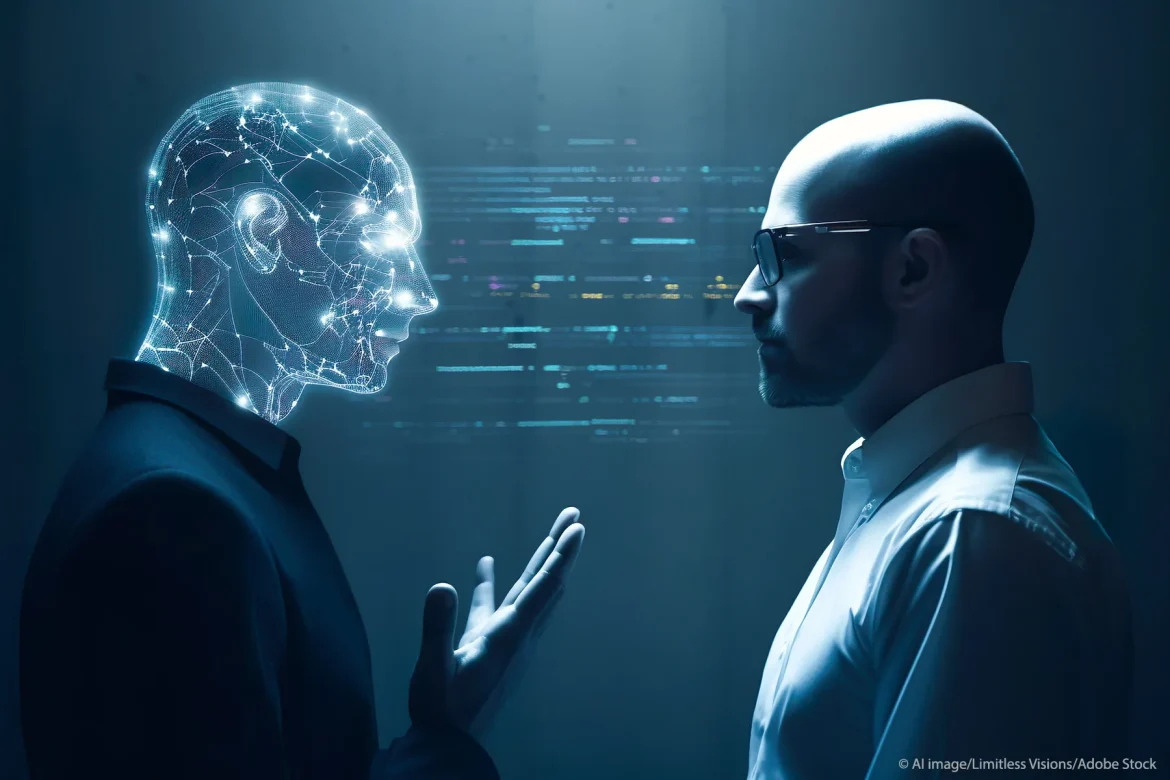
Artificial intelligence (AI) has rapidly transformed from a theoretical concept into one of the most powerful tools of the 21st century. While AI was initially designed to automate repetitive tasks and analyze large datasets, its potential has grown far beyond these early applications. Today, AI is being used not only in scientific research and healthcare but also in art, literature, and music. This raises an intriguing question: how will AI shape the future of human creativity?

Creativity has long been considered a uniquely human trait, tied to consciousness, imagination, and emotional depth. However, with the rise of generative AI systems, machines can now produce paintings, write stories, compose music, and even design complex structures. Some argue that these systems are not truly creative since they rely on patterns from existing human works, but others believe that AI is expanding the definition of creativity itself.

Pages: 1 2 3

Advertisement

Technology can overwhelm us—or make life easier. These hacks help you use digital tools more efficiently.

1. Use Keyboard Shortcuts
Learn shortcuts for your most-used apps. For example, Ctrl + Shift + T reopens closed tabs, saving frustration.

2. Inbox Zero with Filters
Set filters to automatically sort newsletters, receipts, and promotions. Your inbox becomes cleaner, reducing decision fatigue.

3. Cloud Notes for Everything
Keep notes in cloud apps like Google Keep or Notion. Whether it’s grocery lists or ideas, you’ll access them from any device.

Pages: 1 2 3

Advertisement

Traveling is exciting but often stressful. These hacks simplify packing, save money, and make journeys smoother.

1. Roll Clothes, Don’t Fold
Rolling clothes saves space and reduces wrinkles. For extra efficiency, use packing cubes.

2. Pack a Power Strip
Hotel rooms often have limited outlets. A compact power strip ensures all your devices charge simultaneously.

Pages: 1 2 3

Advertisement

Newer Posts
logo

Contact information

Bocceferti LLP

3125 Elm Street, Apartment 502, Toronto, Ontario, Canada

+13199302481
info@bocceferti.com

Disclaimer

This site is not intended to be diagnostic. Results may vary. This information is not a direct recommendation and should not be construed as such. They are not a substitute for a personal consultation or examination by an authorized professional. Consult a professional before starting a new diet or taking supplements. The information provided should be used as a recommendation for an ongoing lifestyle and is not a substitute for a varied and balanced diet.